
Canada’s Trade Tie with the U.S. Declared Dead — What This Means for Markets & Traders
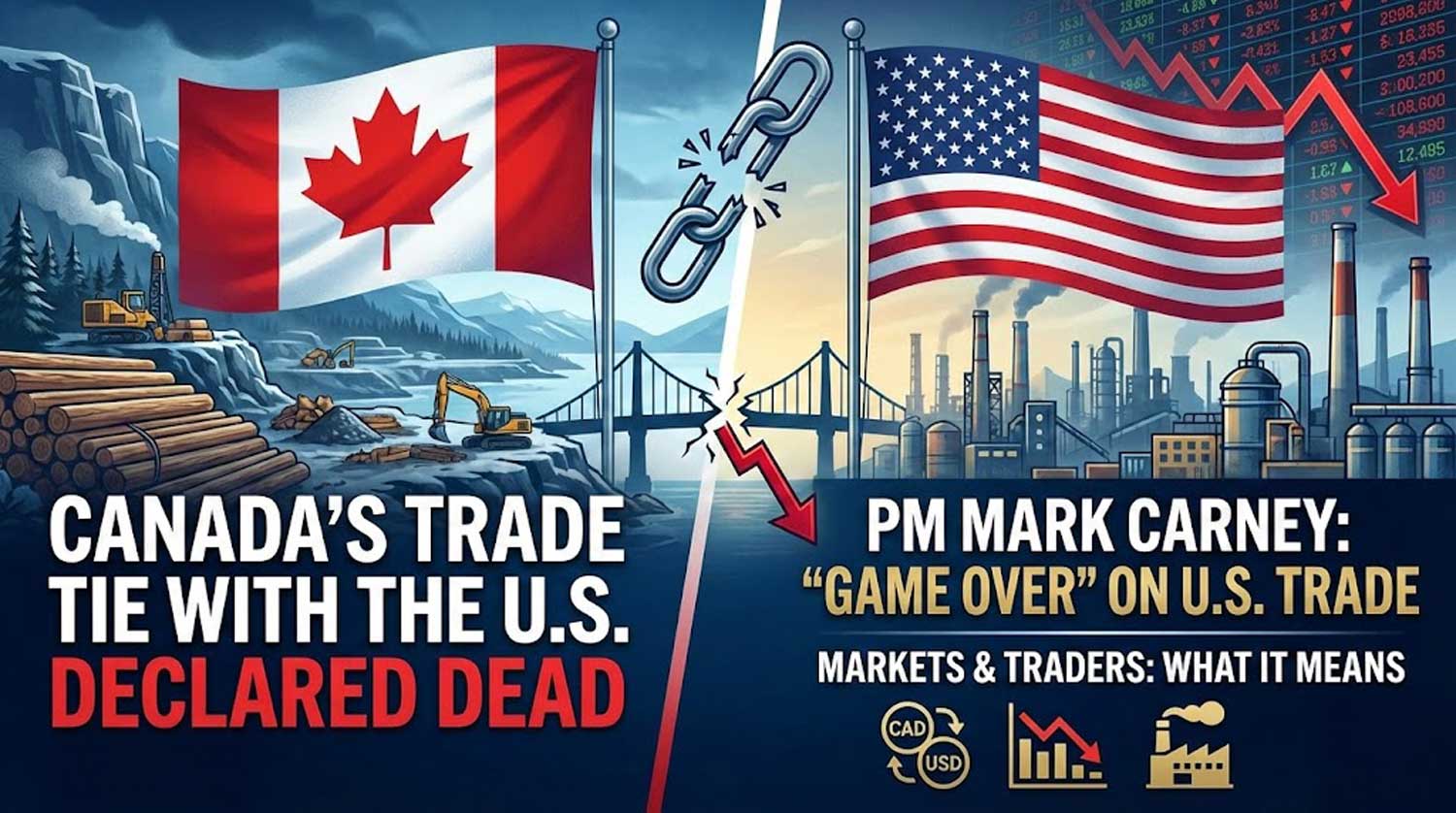
Ottawa Says “Game Over” on U.S. Trade — Carney Sparks Market Ripples
Canadian Prime Minister Mark Carney declared that the once-tight trade relationship with the U.S. has “ended” under recent U.S. policies.
According to him, what used to be a cornerstone of Canadian prosperity — stable trade with the U.S. — is now a “weakness,” forcing Canada to pivot.
Analysts are calling this a structural shift, not just another back-and-forth tariff flare-up.
What’s Changing — and What’s Broken
Carney’s message indicates three big shifts:
- Canada will no longer treat U.S. trade access as a given — expect more protectionist policies, subsidies for domestic industries, and efforts to reroute trade.
- Sectors reliant on cross-border trade — steel, lumber, autos, energy — are likely to see tougher regulations or increased local-source mandates.
- Canada is signaling a push for economic self-reliance and supply-chain diversification away from the U.S. This means supply chains, sourcing strategies, and trade flow assumptions could all be disrupted.
Markets & Investors — Sectors Already Reacting
Industrial & Resource Plays Gain Favor
Industries such as lumber, mining, forestry, energy, and domestic manufacturing may pick up demand as Canada shifts toward domestic-first sourcing. That could benefit resource-heavy equities and materials plays in Canada and abroad.
U.S.-Exposed Equities Face Pressure
Companies that rely heavily on cross-border trade with Canada — especially in manufacturing, auto-parts, steel & aluminum — might see profit margins squeezed. Watch for higher cost of goods and supply-chain bottlenecks.
FX & Currency Markets Could Feel It
If trade volumes between Canada and the U.S. drop long-term, pressure may build on the Canadian dollar and credit markets tied to cross-border flows.
Do you want to see how to make more plays? Do you want to find gains yourself?
Unusual Whales helps you find market opportunities through our market tide, historical options flow, GEX, and much, much more.
Create a free Unusual Whales account to start conquering the market.
What to Watch Next — Key Risk & Opportunity Signals
| Indicator | What to Monitor / Why |
|---|---|
| Canadian domestic-industry subsidies & stimulus packages | Could signal government support for resource & manufacturing stocks |
| Trade-flow data & import/export volumes between US & Canada | Continued decline = structural decoupling, higher risk for cross-border businesses |
| Commodity & resource price momentum / volatility | Global demand + Canadian internal demand could drive rallies |
| FX rate moves, Canadian debt yields, credit spreads | Reflect shifting capital flows and currency/credit risk as trade recedes |
| Options flow in sector-sensitive equities (e.g. materials, industrials, exporters) | Early signal of repositioning by market players |
Bottom Line: Canada Is Betting on Self-Reliance — Markets Must Adjust
Carney’s declaration isn’t symbolic. It signals a real break with decades of dependency on U.S. trade. For markets, that means the old playbook — heavy cross-border supply chains, stable trade, synchronized duty cycles — may no longer apply.
If you trade or invest in resource, industrial, export, or supply-sensitive names — especially those with Canadian exposure — now’s the time to re-evaluate.