
Max Pain Explained: A Primer for Retail Traders
I wanted to talk more about Max Pain, and why it's an interesting indicator by market theory. Max Pain shares some assumptions with Gamma Exposure (GEX), so let's cover those again before diving in.
What Is the Max Pain Indicator?
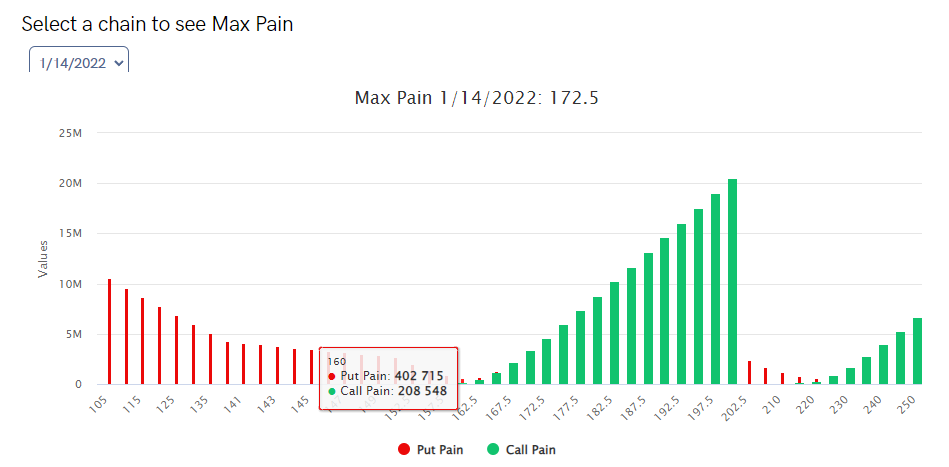
Max Pain is the price level where the maximum number of options expire worthless. Market makers (MMs) often hedge their written calls and puts to remain delta neutral. As expiration approaches, they may try to "steer" the underlying price toward a level where the greatest number of contracts expire worthless. This effect is sometimes referred to as "pinning."
Max Pain is similar to Gamma Exposure but not identical: Max Pain points to the price where the highest volume of contracts expires worthless, while GEX highlights where the largest net gamma exposure lies relative to price, which can push prices above or below certain levels.
How Max Pain Is Calculated
The standard Max Pain calculation goes like this:
- Take the difference between the spot price and each strike.
- Multiply that difference by the open interest (OI) for calls and puts at that strike.
- Add the dollar value for calls and puts at each strike.
- Repeat this process across the entire options chain.
- The lowest combined value is the Max Pain price.
For example, suppose AAPL has heavy call and put open interest around $160. If the Max Pain value is 160, MMs might try to keep AAPL’s close in a range—say 157.5 to 165—so that most contracts expire worthless at expiration.
Why Max Pain Can Matter For Traders
Pinning near Max Pain can be helpful if you want a rough idea of where MMs might try to settle the price. You can use Max Pain as a hedging tool—for instance, if you’re long or short a stock, the Max Pain price can indicate a potential expiration target. Some traders also use Max Pain for directional bias, fading moves away from the Max Pain level.
Differences Between Max Pain and Gamma Exposure
- Max Pain – Identifies the strike price at which the maximum dollar amount of open-interest contracts would expire worthless. MMs might push the price there to collect premiums.
- GEX – Highlights where net gamma exposure is most significant, implying price levels where volatility might increase or the stock might remain pinned above or below certain points.
It’s worth watching both to understand how MMs may hedge and how that could affect price behavior near expiration.
Criticism and Limitations
There’s debate about how reliably MMs can or will push the underlying price. Assumptions that MMs are always short calls and puts are often challenged; retail behavior and market conditions can change the dynamics. Many traders find Max Pain useful, but it’s just one indicator among many. Remember that major news, earnings, or macro events can overwhelm any pinning effect.
More Options Education from Unusual Whales
- Gamma: A Primer – Reviews gamma as the change in delta per $1 move and explains why gamma spikes near expiration.
- Gamma Flip: A Primer – Explains how dealer hedging flips when net gamma crosses zero and why that can amplify volatility.
- Delta: A Primer – Defines delta as the rate of change of an option’s price relative to a $1 move and discusses how traders use it to gauge the probability of finishing in the money.
(Editor's note: This article was updated for content and clarity on November 11, 2025)