
Musk Says Money Won't Matter in 2036 as AI Ushers in Abundance
Elon Musk told The Economist that money won't matter by 2036 as AI and robotics eliminate scarcity. The prediction lands as his net worth drops $16.3B a day.
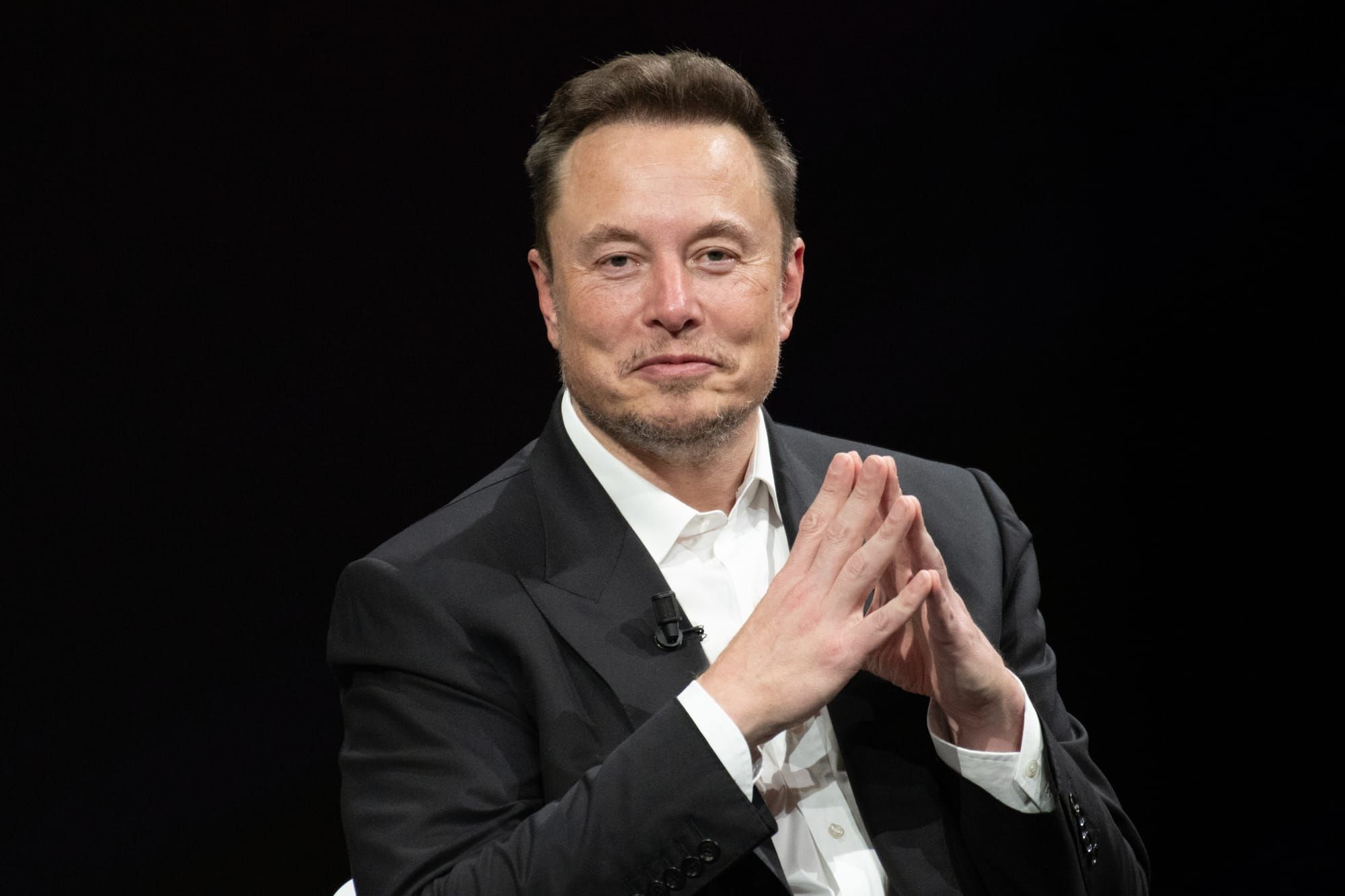
Elon Musk has a new prediction, and it is aimed straight at the concept of currency itself. Musk told The Economist money will not matter by 2036 as artificial intelligence (AI) and robots outproduce demand. For a market pricing trillion-dollar valuations in dollars, that is a strange thing for a founder to say out loud.
What Musk actually said
Musk made the prediction during an extended interview with Economist editor-in-chief Zanny Minton Beddoes, recorded at the Texas Gigafactory and published in late July 2026 as part of the outlet’s Insider series. The thesis is simple: robots and AI produce so much that scarcity collapses, and with it, the utility of money.
“You want money for food, housing, transport, entertainment,” he said. “If that is so abundant, what do you need money for in that case?” He predicted deflation rather than inflation, arguing output would outrun the money supply as robots and AI take over production.
The timing is awkward
The world’s richest man has been losing money at a historic clip. Over roughly the past month, Elon Musk’s net worth has fallen by an average of $16.3 billion a day, according to a Benzinga tally.
Shortly after SpaceX’s June 12, 2026 IPO, priced at $135 a share and valuing the company near $1.77 trillion, Musk’s paper wealth touched roughly $1.45 trillion, briefly making him the world’s first trillionaire. Per Benzinga, his net worth fell from about $1.32 trillion to roughly $832 billion over the course of a month, a decline of $488 billion, the figure that produces the $16.3 billion daily average.
Do you want to see how to make more plays? Do you want to find gains yourself?
Unusual Whales helps you find market opportunities through our market tide, historical options flow, GEX, and much, much more.
Create a free account here to start conquering the market with Unusual Whales.
The abundance thesis, and the pushback
Musk frames the coming decade as “an age of amazing abundance where anyone can have anything they can think of,” and predicts AI will “exceed the sum of human intelligence in about… around five years.” In the same conversation he sketches “universal high income,” says “work is going to be optional,” and suggests the Treasury should “just simply issue people checks.”
Not everyone is buying it. Economists at the American Institute for Economic Research and writers at The Daily Economy argue that scarcity does not disappear when robots make physical goods cheap. It shifts. A house with a specific view, a seat at a top school, or the attention of in-demand people remains scarce, no matter how cheap manufactured goods become. Money, or something like it, still rations access to those things.
The contradiction for investors
Tesla’s current stock price rests heavily on expectations for Optimus, the company’s humanoid robot. Investors expect to collect returns on that bet. Those returns would be paid in dollars. Musk said dollars won’t matter much in 2036.
SpaceX went public at a $1.77 trillion valuation, also priced in dollars. The investors who bought shares at that price are betting on a company whose founder just predicted the currency of their payout will lose relevance right around when they’d expect to get paid.
Options market and stocks to watch
Watch TSLA for flow tied to Optimus and robotaxi narratives, which sit at the core of Musk’s abundance pitch. Watch NVDA as the pick-and-shovel name if AI compute buildouts accelerate on Musk’s five-year superintelligence timeline.
Watch GOOGL and MSFT for how the market prices AI cash flows against a deflationary thesis. And watch AMZN for warehouse robotics and labor-substitution positioning as the humanoid story broadens beyond Tesla. For more, see other news here.
Want more market intelligence? Create your free Unusual Whales account for options flow, market tide, GEX, and the full toolkit.