
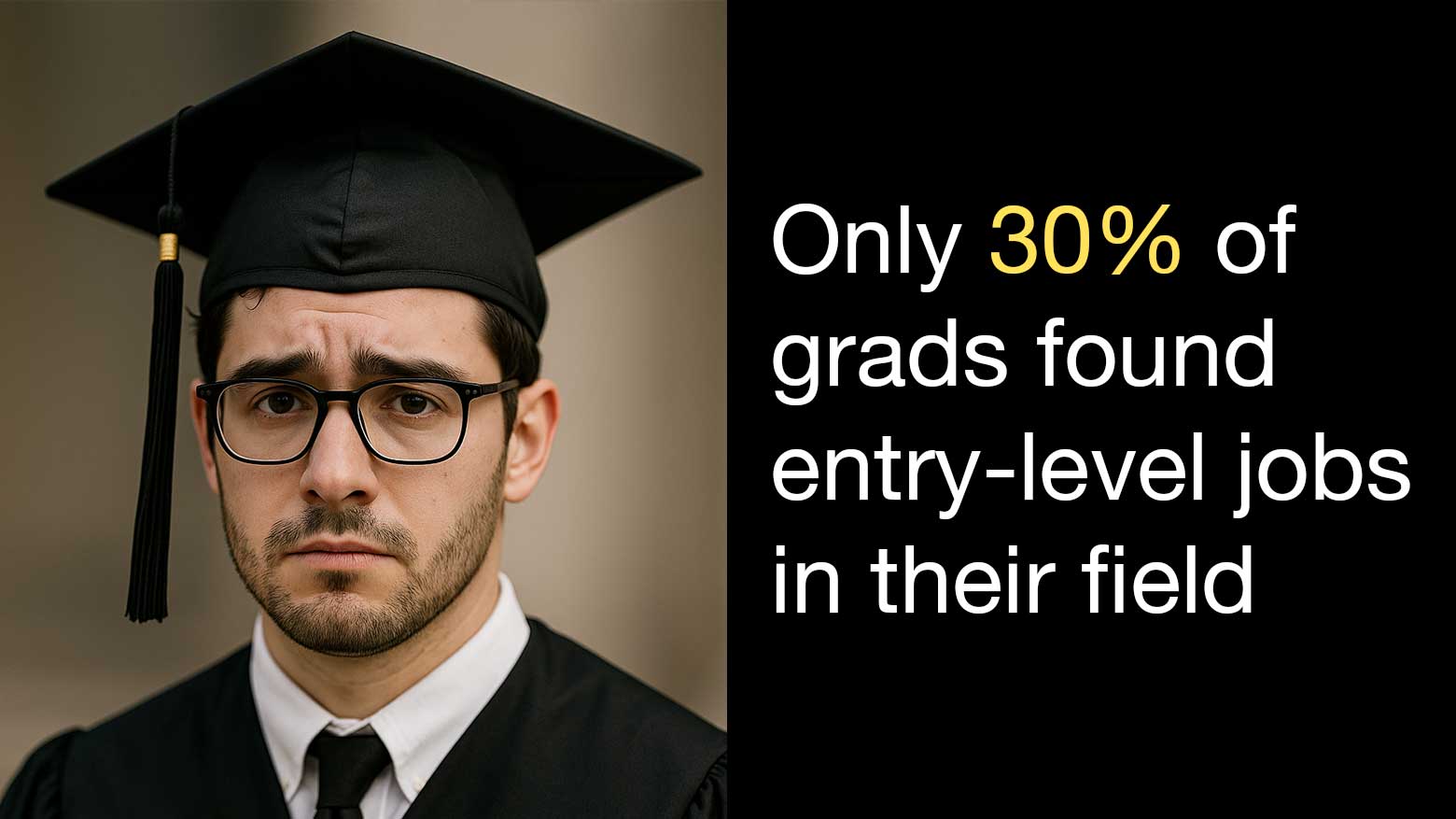
Only 30% of 2025 college graduates and 41% of 2024 graduates found entry-level jobs in their fields
Key takeaways
- Just 30% of 2025 graduates have jobs in their field, down from 41% of 2024 graduates.
- 76% of employers are hiring the same or fewer entry‑level employees because of tight labor markets, AI adoption, and economic pressures.
- 48% of graduates feel unprepared for entry‑level roles, and 56% of those cite missing practical skills.
- Generative AI automates routine junior tasks and is reshaping entry‑level roles.
If you're graduating soon, the numbers might feel daunting. Cengage's 2025 Graduate Employability Report says only about one-third of 2025 graduates have full‑time jobs related to their degree, down from 41% of the 2024 cohort. Roughly a third of this year’s class is still looking for work, and about a quarter are working outside their field.
Employers are pulling back on entry‑level hiring
Companies are cutting back on entry‑level hiring. Three‑quarters of employers say they’re taking on the same or fewer junior workers than last year. Many blame a tight labor market, the growing use of AI, and wider economic pressures. With more roles now requiring a two‑ or four‑year degree, that squeeze means fewer opportunities for new grads.
Graduates feel unprepared — and employers and educators disagree on skills
Many young job seekers feel underprepared: nearly half say they don’t feel ready to apply for entry‑level jobs, and more than half of those trace the problem to missing practical skills. The Cengage survey also shows employers and educators don’t see eye to eye.
Employers prioritize job‑specific abilities, while professors emphasize soft skills. That mismatch leaves students caught in the middle. Kimberly Russell of Cengage points out that many graduates wish their programs worked more closely with employers.
AI and the vanishing “bottom rung”
Generative AI is another factor. Tools that draft code, review documents, and answer customer questions have started to take over tasks that used to help new hires learn the ropes. LinkedIn executive Aneesh Raman warns that “the bottom rung of the career ladder” is breaking as AI takes on routine work, and he compares it to the collapse of manufacturing jobs in the 1980s. AI hasn’t wiped out junior roles, but it is changing them: graduates are expected to work alongside AI from day one and bring more analytical or creative skills to the table.
What graduates and employers can do
Experts say colleges and companies should adapt. Michael Hansen, Cengage’s CEO, notes that giving people the chance to use their skills brings not just income but dignity and stability. The report urges universities to embed job‑specific technical training and AI literacy in their curricula and asks employers to mentor young workers and spell out growth paths.
Graduates should focus on versatile technical skills—coding, data analysis, digital communication—while nurturing curiosity and interpersonal abilities. And networking still matters; Cengage found that personal referrals play a big role in landing that first job.
The bottom line
This year’s entry‑level job market looks like the toughest in years. Only about one in three 2025 graduates land a job related to their degree, and nearly half feel unprepared to even apply. AI is making some tasks obsolete but not the jobs themselves, and success will depend on how quickly colleges, employers, and graduates adjust.
Sign up for Unusual Whales
If you want to see how news, jobs data, and market catalysts actually move stocks in real time, sign up for a free account on Unusual Whales. Track options flow, monitor market reactions, and stay ahead of the next move.