Sam Altman: AI Won't Deliver the Four-Hour Workweek
OpenAI CEO Sam Altman says AI won't deliver the four-hour workweek because people are competitive and will fill any freed-up time with more work. Here is the read-through for AI infrastructure and enterprise software names.
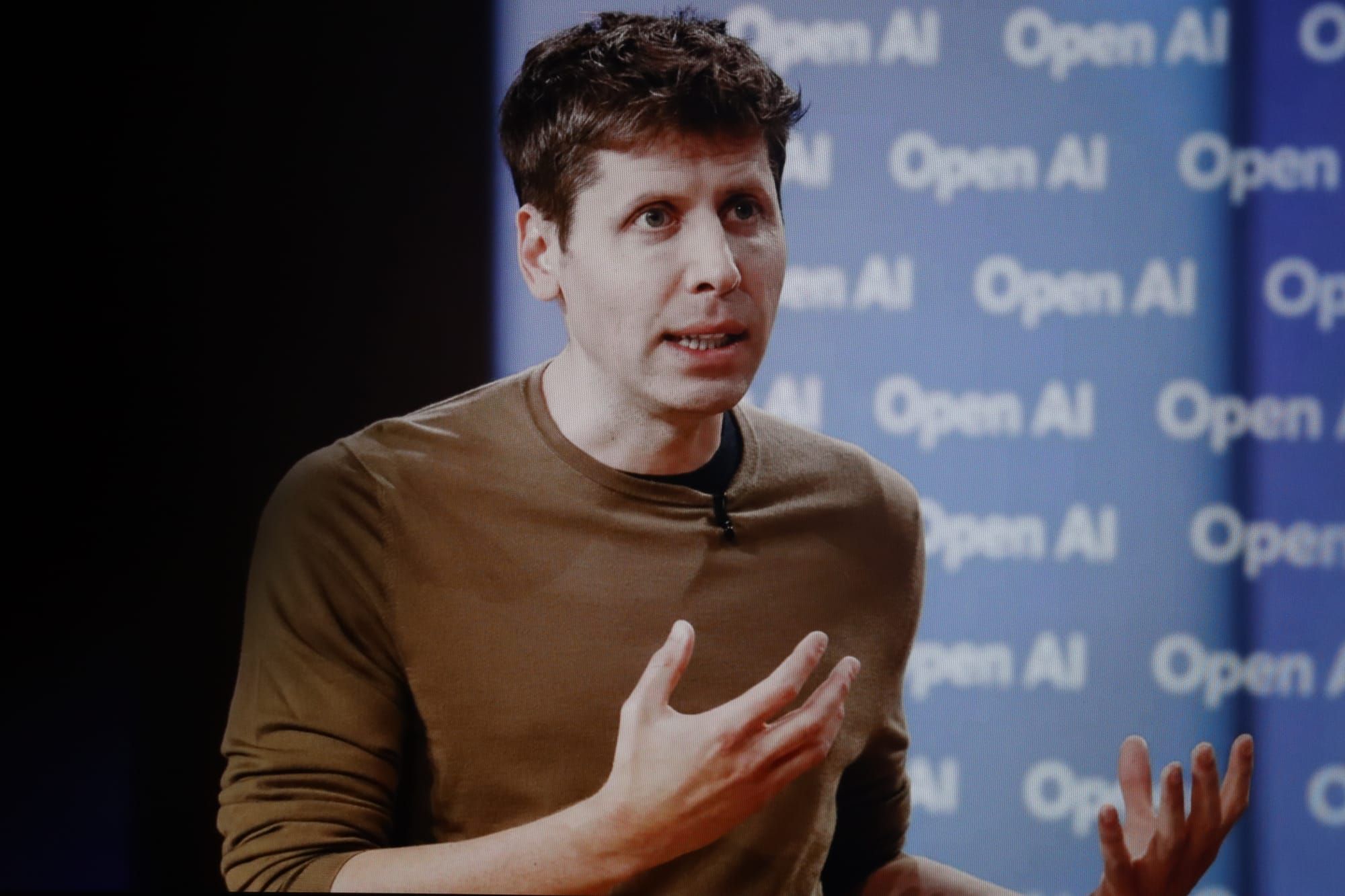
OpenAI CEO Sam Altman is pouring cold water on the idea that AI will hand workers a shorter workweek. Speaking on the Relentless podcast with host Ti Morse, Altman argued that human ambition, not tech capability, is what keeps hours long.
What Altman actually said
Altman said “Technology, for a long time, has been promising people that they’re going to work less and they’re going to have all this leisure,” but “somehow we never get the promise of the four-hour workweek at mass scale in society,” adding, “And I don’t expect AI to change that.”
He said that as AI drives productivity gains, people are increasingly expecting more of themselves. “I think we’re all going to be much busier than we thought we were supposed to be in a post-superintelligence world,” he said during the podcast.
The competitiveness argument
Altman says productivity gains don’t become leisure — they become new status competitions. Altman frames economic life as a “relative game.” People measure themselves against each other, not against some abstract ideal of contentment.
Translation for markets: if AI keeps expanding the workload rather than compressing it, expect enterprise software and AI infrastructure demand to keep compounding — not plateau.
Do you want to see how to make more plays? Do you want to find gains yourself?
Unusual Whales helps you find market opportunities through our market tide, historical options flow, GEX, and much, much more.
Create a free account here to start conquering the market with Unusual Whales.
The awkward contradiction
OpenAI’s own policy paper proposes a 32-hour workweek at 40-hour pay, plus a public wealth fund, according to Fortune and Yahoo Finance. That sits uneasily next to Altman’s claim that shorter weeks aren’t coming.
Zoom CEO Eric Yuan has predicted a three-day workweek, while JPMorgan’s Jamie Dimon has floated roughly 3.5 days, per Fortune. The C-suite consensus is split on whether AI ends up shortening hours or simply raising the bar.
The macro read for traders
If Altman is right, the productivity gains from AI flow to output and margins rather than to labor. That is bullish for the AI capex complex and for enterprises deploying AI to lift throughput per worker.
If the shorter-workweek camp wins out, labor spend compresses and consumer-services time budgets shift — a different setup entirely.
Options market and stocks to watch
Traders will be looking at names tied directly to the AI productivity thesis:
- MSFT: watch for continued Copilot and Azure demand if AI keeps expanding workloads rather than shrinking them.
- NVDA: watch for compute demand tied to enterprise AI adoption if productivity gains keep getting reinvested.
- GOOGL: watch for Workspace AI monetization as knowledge-worker output expectations rise.
- CRM: watch for AI-agent uptake if companies push more work per seat rather than fewer seats.
- NOW: watch for enterprise workflow automation spend tied to the “do more with the same headcount” playbook.
Want more market intelligence? Create your free Unusual Whales account for options flow, market tide, GEX, and the full toolkit.