
Trump: U.S. Likely to Pay Back $149 Billion in Tariffs
Trump said the U.S. will likely have to refund roughly $149 billion in tariffs after the Supreme Court struck down the IEEPA duties. The refund is on top of an estimated $300 billion in lost annual tariff revenue.
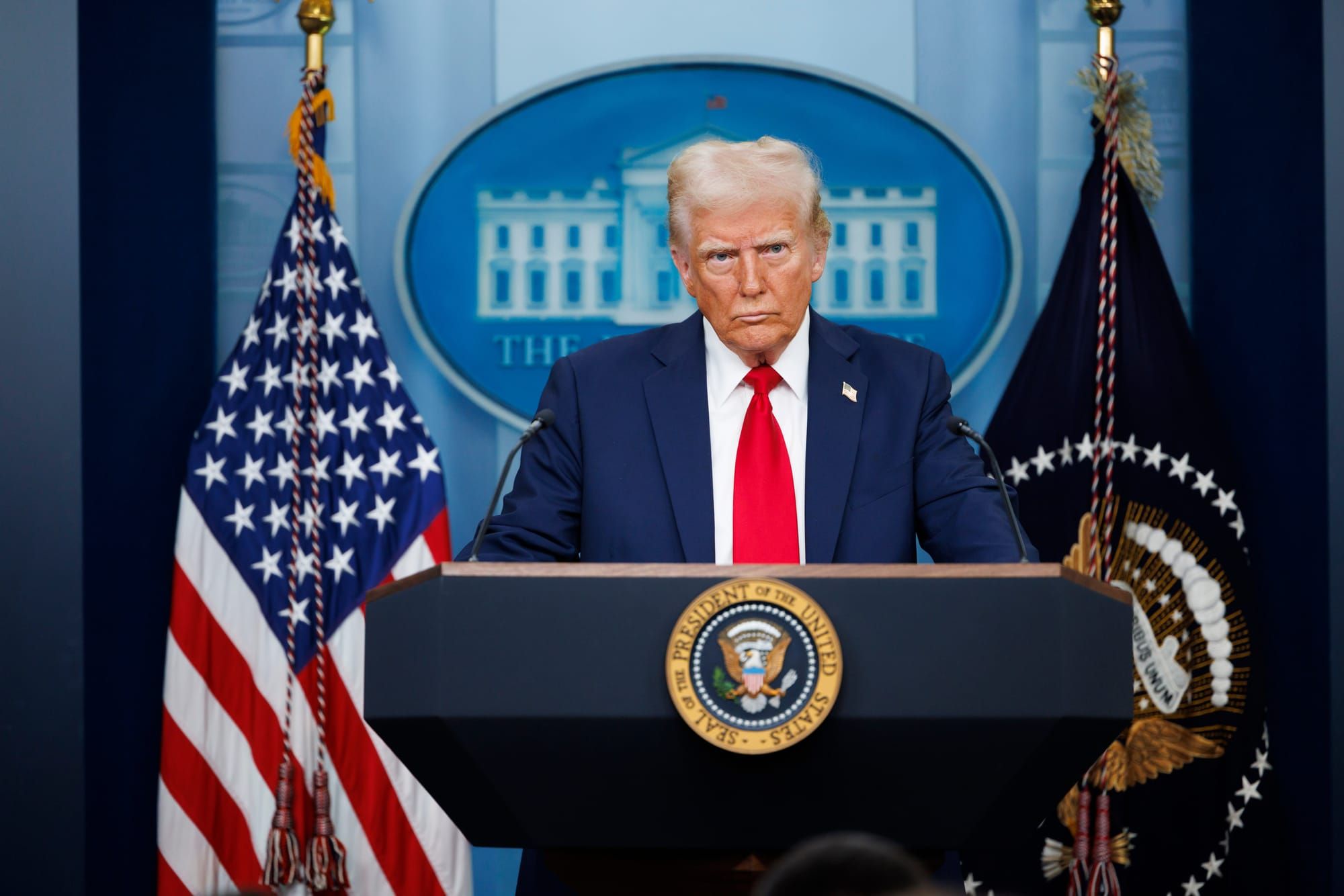
President Trump said the U.S. will likely have to pay back roughly $149 billion in tariffs collected under his Liberation Day regime, after the Supreme Court struck down the IEEPA-based duties as unconstitutional. The refund is on top of an estimated $300 billion in lost annual run-rate revenue going forward.
What Trump actually said
Speaking to Fortune on May 18, 2026, Trump said it ‘really pisses me off’ in reference to the Supreme Court ruling that struck down roughly half of last year’s Liberation Day tariffs as unconstitutional. He framed the refund as money going ‘to people who hate us, to countries that ripped us off for years,’ pegging the figure at $149 billion.
Trump said he can live with the ruling itself and plans to rebuild the tariff regime under different statutory authorities, just more slowly.
How big is the hole
White House trade adviser Peter Navarro had estimated $600-700 billion a year in tariff revenue, a figure economists called widely overstated, and now figures the new sum will be chopped nearly in half, implying roughly $300 billion in lost annual run-rate plus the one-time $149 billion walking back out of Treasury.
For context, customs duties raised $264 billion for the federal government in calendar year 2025, compared to $79 billion in 2024. The refund pipe is now open and importers are lining up.
The refund mechanics
The tariffs collected roughly $166 billion in revenue before a February Supreme Court ruling found Trump lacked the legal authority to impose them, leaving the administration on the hook to pay it all back to American importers plus interest.
Refunds are expected to take between two and three months to reach importers’ bank accounts, a timeline that could be extended if CBP flags applications for review. Only parties formally designated as importers of record are eligible, meaning consumers who paid higher prices are unlikely to see any of their money returned.
Do you want to see how to make more plays? Do you want to find gains yourself?
Unusual Whales helps you find market opportunities through our market tide, historical options flow, GEX, and much, much more.
Create a free account here to start conquering the market with Unusual Whales.
Trump’s next move on tariffs
In the wake of the Supreme Court decision, Trump vowed to implement new reciprocal tariffs under a different provision of the Trade Act of 1974, and signed an executive order imposing a new 10% ‘global tariff’ under Section 122 of that act.
One small business owner told Time she expected to ‘end up having to turn around and pay that refund right back out to their new tariffs.’ Translation: the trade-policy overhang is not going away even with the refund checks going out.
Options market and stocks to watch
FedEx (FDX): FedEx, one of the largest companies involved in the class action lawsuit, said it would return tariff refunds to customers. Watch for any commentary on margin pass-through.
Costco (COST): a named plaintiff in the refund litigation. Watch for any quantification of refund dollars hitting the P&L.
Skechers (SKX) and Revlon (REV): both are among more than 3,000 businesses, including high-profile plaintiffs FedEx, Costco, Skechers, Revlon, Toyota, and Nintendo of America, that sued the Trump administration in hopes of securing refunds. Watch import-heavy consumer names for any one-time benefit.
Toyota (TM): another named plaintiff with significant U.S. import exposure. Watch for guidance changes tied to refund timing and the new Section 122 global tariff.
For more macro and tariff coverage, see Unusual Whales news.
Want more market intelligence? Create your free Unusual Whales account for options flow, market tide, GEX, and the full toolkit.