
Trump Declares Venezuela Airspace “Closed” — Geopolitical Shock Raises Market & Energy Risks
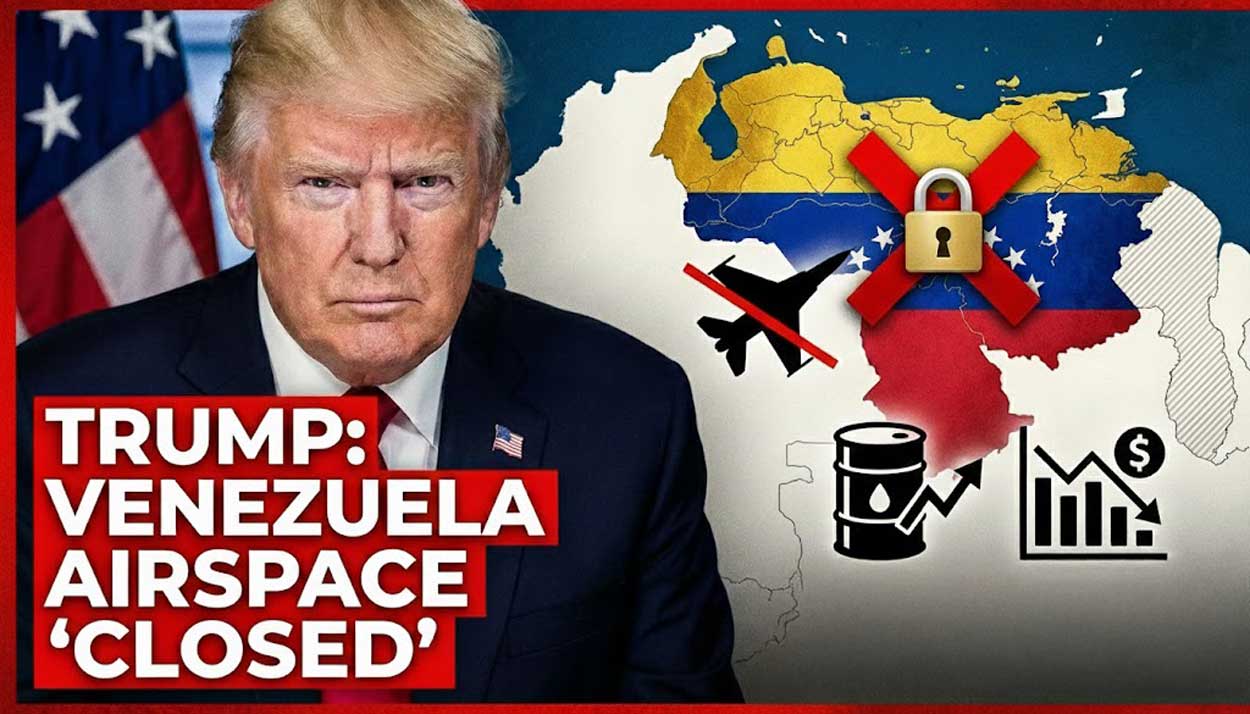
President Trump announced that the airspace above and around Venezuela should now be treated as “closed in its entirety,” a dramatic escalation that surprised U.S. officials and rattled geopolitical analysts. Reuters reports that no enforcement mechanism or military directive accompanied the declaration, leaving uncertainty over whether this is policy, deterrence, or rhetorical escalation.
Venezuela condemned the move immediately, calling it a “hostile, unilateral” violation of sovereignty. U.S. intelligence and Pentagon officials reportedly had no prior notice, fueling speculation over internal coordination and signaling. The announcement also comes against a backdrop of increased U.S. naval presence in the Caribbean, further raising concerns about instability or miscalculation in a volatile region.
For markets, energy flows, air traffic, and geopolitical risk premia are now in play. Even without immediate enforcement, the declaration signals higher uncertainty — which traders should not ignore.
Why This Matters for Energy, Aviation, and Global Risk
Air Routes at Risk
The region is already avoided by many major carriers. A formal or semi-formal “closure” could trigger rerouting, travel disruptions, insurance adjustments, and cargo delays — affecting aviation, shipping, and trade.
Energy & Commodity Sensitivity
Any perceived instability in or near Venezuela — still a meaningful player in global oil — increases headline risk for crude markets. Traders should watch for sudden spikes in oil volatility, emerging-market commodities, and credit pricing tied to Latin America-linked issuers.
Emerging-Market Fragility
With tensions rising, EM debt and currency markets may face widening spreads. Regional ETFs and funds could see outflows if risk escalates.
Do you want to see how to make more plays? Do you want to find gains yourself?
Unusual Whales helps you find market opportunities through our market tide, historical options flow, GEX, and much, much more.
Create a free Unusual Whales account to start conquering the market.
What Traders Should Watch
Energy Names & Oil Volatility
Watch for unusual options flow in oil and energy names if markets begin pricing in supply-chain risk.
Airlines & Logistics
Cargo rerouting or heightened insurance premiums could hit margins — volatility may pick up in aviation and shipping equities.
Emerging-Market Debt
Higher geopolitical risk usually means wider credit spreads. Traders should watch EM bond ETFs and Latin America-heavy portfolios for stress signals.
Safe-Haven Assets
Gold, Treasuries, and volatility-index products may see inflows if the situation escalates.
The Bigger Picture
Declaring another country’s airspace “closed” — even symbolically — is a sharp escalation. It introduces new geopolitical risk into markets that are already uneasy about inflation, interest rates, and global conflict spillover. Traders should expect volatility clusters to form around energy, shipping, and EM credit.
For investors and traders, this is a geopolitical shock that may not be fully priced in.