
U.S. Obesity Rate Dips — What It Means for Consumer Behavior & Markets
Obesity ticking down — what Gallup found
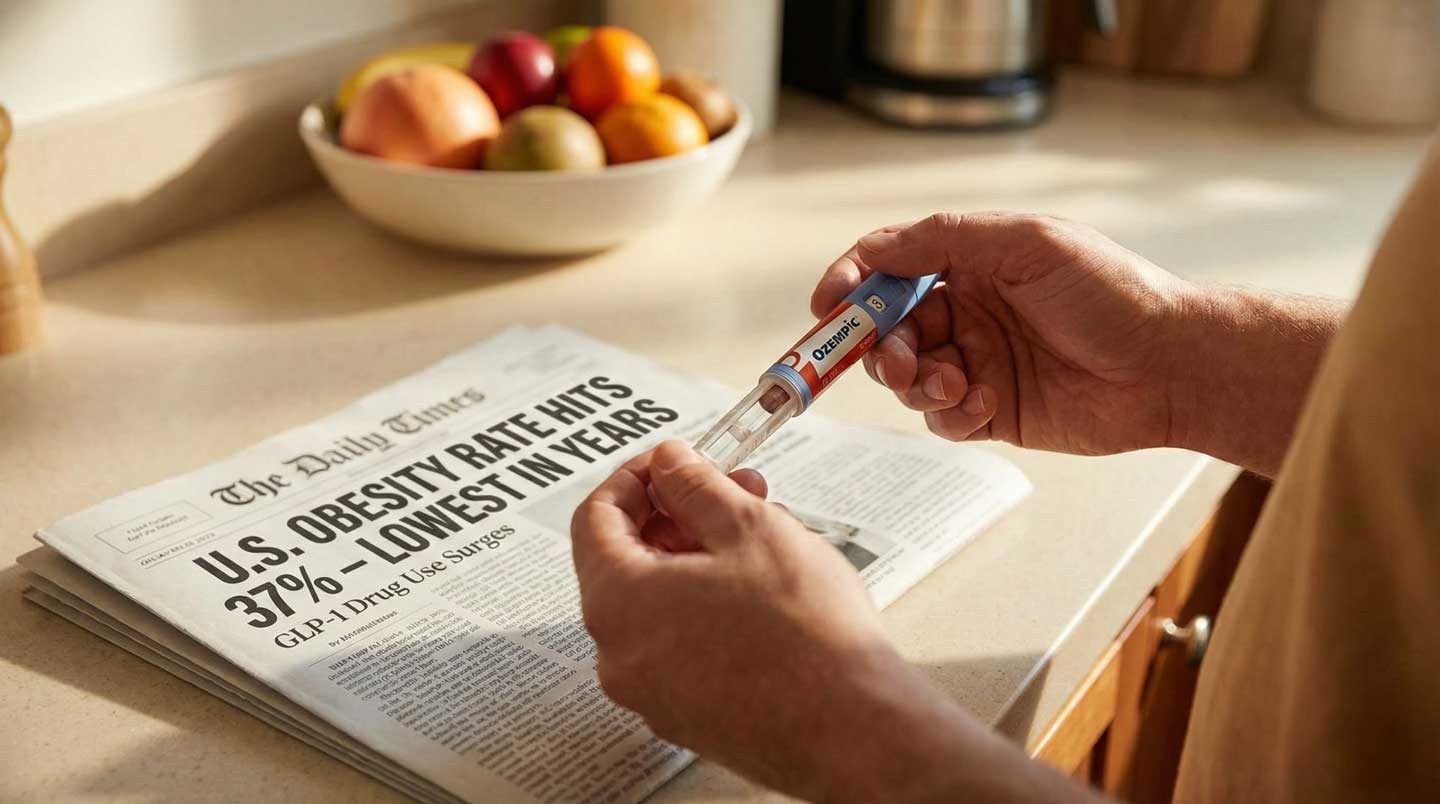
According to the latest Gallup National Well-Being Index, the U.S. adult obesity rate has fallen from a record high of 39.9% in 2022 to 37.0% in 2025. That represents an estimated 7.6 million fewer adults classified as obese compared with three years ago.
The timing aligns with a steep climb in use of GLP-1 injectable drugs for weight loss (think Ozempic / Wegovy). As of 2025, 12.4% of U.S. adults report using GLP-1s for weight loss — up from 5.8% in early 2024. Usage is higher among women (15.2%) than men (9.7%).
Breakdowns by demographic show the biggest obesity-rate drops among people in their 40s to 60s — groups with the highest reported usage of GLP-1s.
But it’s not all wins: diagnoses of diabetes have reached an all-time high at 13.8%. Since diabetes is often a lifetime diagnosis, short-term drops in obesity don’t automatically mean fewer diabetes cases.
Why this matters — from groceries to wellness economies
Changing consumption habits
As more people shed weight — or attempt to — priorities shift. Reduced appetite, smaller portions, and new diet/lifestyle patterns can ripple across spending on snacks, fast food, restaurants, alcohol, and even clothing (smaller sizes, fitness wear). Early reports suggest some companies are already adapting menus, marketing, and inventory to match new habits.
Health-economy ripple effects
Lower obesity rates could ease pressure on long-term healthcare costs and chronic disease burden — though rising diabetes rates complicate that narrative. Still, demand for health and wellness services, fitness, preventive care, and weight-management products could increase.
A shifting retail & sector demand landscape
If fewer people buy oversized clothing, less fast food, and fewer high-calorie snacks — sectors that thrived on those patterns may see muted demand. Conversely, nutrition, wellness, fitness, lighter food, and lifestyle sectors could see a boost.
What this could mean for markets and options flow
- Consumer-discretionary & retail names — expect potential softness in fast-food, casual dining, and value-snack businesses; investors may express that via increased put interest or declining call volume.
- Health, wellness, fitness, and supplement plays — could see increased interest as demand shifts to healthier lifestyles. Expect call-heavy flow, possible elevated open interest in niche wellness/fitness stocks.
- Clothing retailers, especially apparel focused on “plus-size” or larger fits, may see shrinking demand; more demand instead may go to fitness- and activewear-type retailers.
- Food-service & grocery chains that market indulgent or high-calorie foods — may become riskier bets; watch for skewed options flow.
- Medical/pharmaceutical firms involved in GLP-1 drugs or related therapies — those continue to remain in focus, though detailed corporate effects may depend on regulation, supply, and broader adoption.
If you track these sectors on Unusual Whales — especially via options flow, GEX, and market tide — you may start seeing early signs of this shift baked into positioning.
Do you want to see how to make more plays? Do you want to find gains yourself?
Unusual Whales helps you find market opportunities through our market tide, historical options flow, GEX, and much, much more.
Create a free Unusual Whales account to start conquering the market.
What’s next — is this trend sustainable?
The early drop in obesity is encouraging — but long-term impact depends on broader access to weight-management therapies, lifestyle changes, dietary habits, and public health infrastructure.
If demand for healthier food, fitness, and wellness services expands sustainably, we may see a structural shift in consumer demand — away from indulgence toward wellness. That could reshape whole sectors, and reward companies aligned with the long-term health-conscious wave.