
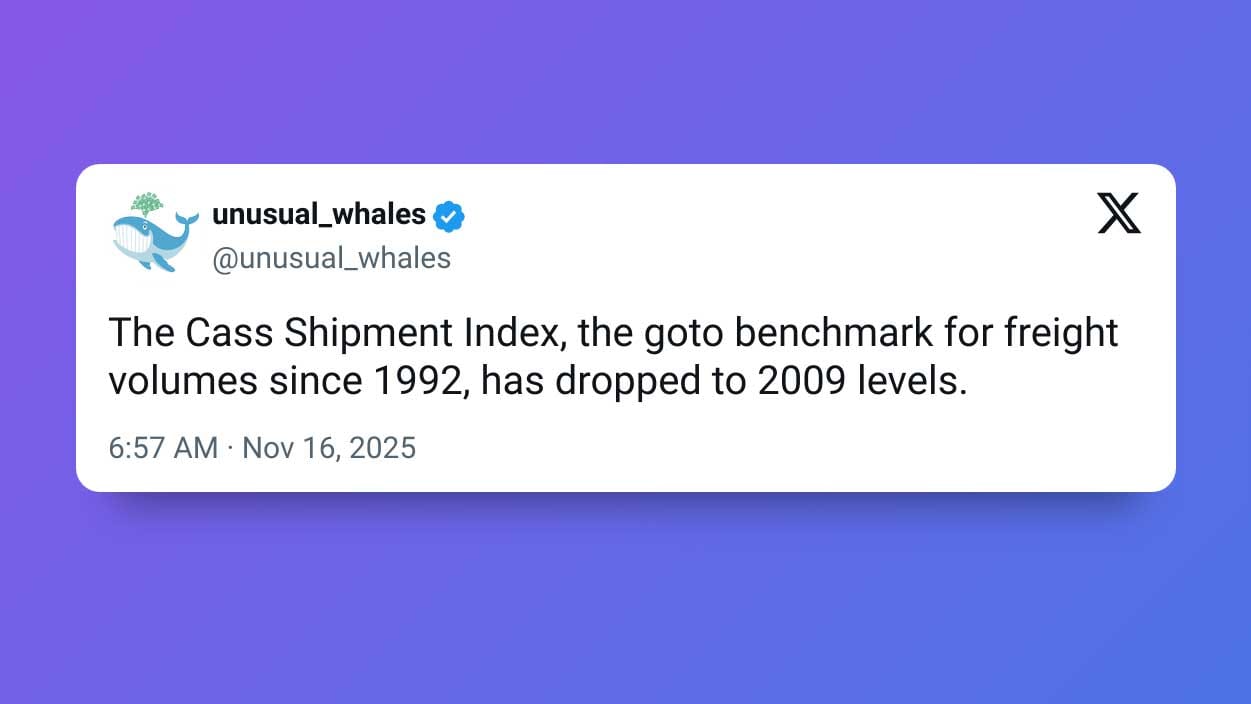
U.S. October Freight Shipments Fall to Worst Level Since 2009, Says Cass Information Systems
Freight Volumes Plunge: What the Data Show
The latest freight-shipping data from Cass Information Systems reveal a sharp decline in U.S. logistics activity:
- The Cass Multimodal Shipments Index fell 4.3% from September to October.
- On a seasonally-adjusted basis the drop was 2.1%.
- The October reading is the lowest since 2009, underscoring the severity of the drop.
- Annually, shipments were down approximately 7.8% compared to a year ago.
In short: freight volume has hit a cyclical low, and that signals weakness in the goods-transport chain and possibly in manufacturing / consumption.
Context & What It Means
✅ Confirmed observations
- Cass is a long-running benchmark for U.S. freight flows (the “Cass Shipment Index”).
- The volume slump comes even as freight rates haven’t collapsed to the same degree; higher rates in some lanes kept total freight spend from falling as much as volumes.
⚠️ Key caveats
- A drop in shipment volume doesn’t always directly translate into consumer-spending weakness—it could reflect inventory drawdowns, supply-chain re-balancing, or seasonal distortions.
- Freight rates rising may mask underlying demand weakness (i.e., fewer shipments, but higher cost per shipment).
- The lowest reading since 2009 is alarming in isolation, but structural shifts (e.g., more digital, less heavy goods movement) may also play a part.
Why this matters
- Freight volume is a leading indicator of economic activity: fewer goods moving means less production, less demand, and often a slowdown in industrial/cl Goods sectors.
- For equities, especially industrials, transportation stocks, logistics providers, this downward signal raises risk.
- For macro and monetary policy, weak freight may raise questions about inflation, growth and the durability of consumption.
Options & Market Implications
What to keep an eye on
- Industrial & transportation stocks: Names like railroads, trucking firms, ports may see earnings risk. If volumes are down, margins may compress.
- Consumer discretionary/retail: If fewer goods are being shipped, inventory levels and consumer demand might be cooling—affecting companies dependent on goods flow.
- Inflation & rate expectations: Dropping freight volumes may signal slack in goods markets, which could shift inflation expectations and rate-sensitive sectors.
Flow & hedging themes
- Implied Volatility (IV) may rise in industrial/transport equities as markets price the risk of decelerating demand.
- Put skew: If volume weakness is trusted, put options may become more expensive relative to calls (investors hedging downside risk).
- Flow alerts: Watch for unusual block trades/large volume in options of transportation/logistics stocks (signalling sentiment shift).
Tickers to monitor via Unusual Whales
- UNP (Union Pacific) or CSX — major railroads, proxy for heavy goods freight.
UnusualWhales UNP Overview - XLI (Industrial ETF) — to capture the broader industrial slowdown.
UnusualWhales XLI Overview - FDX (FedEx) or UPS — express/logistics firms, sensitive to shipment volumes.
UnusualWhales FDX Overview
Strategy ideas
- If you believe the freight slump is early warning of broader industrial weakness, consider long puts or collars on industrial/transportation names.
- If you believe the weakness is temporary (inventory cycle) and shipping rebound is forthcoming, you might buy calls or prepare for a reversal in volume and shipping rates.
- Monitor for flow signals — large option blocks or shifts in skew may provide early warning of sentiment shifts.
Final Takeaway
The sharp drop in October freight shipments is a potent signal: goods are moving less, and that may presage weakness in industrial activity and consumer goods. For markets and options players, this is a clear cue to evaluate positioning in industrials, transport and goods-dependent sectors.
The question now is: Is this a temporary inventory pulse, or the start of a broader slowdown? Options flow and skew changes in the right names will help answer that. Because in freight, what stops moving tends to matter for earnings, growth expectations and risk premia.