
White House Eyes $2,000 Tariff-Revenue Dividend Without Congress
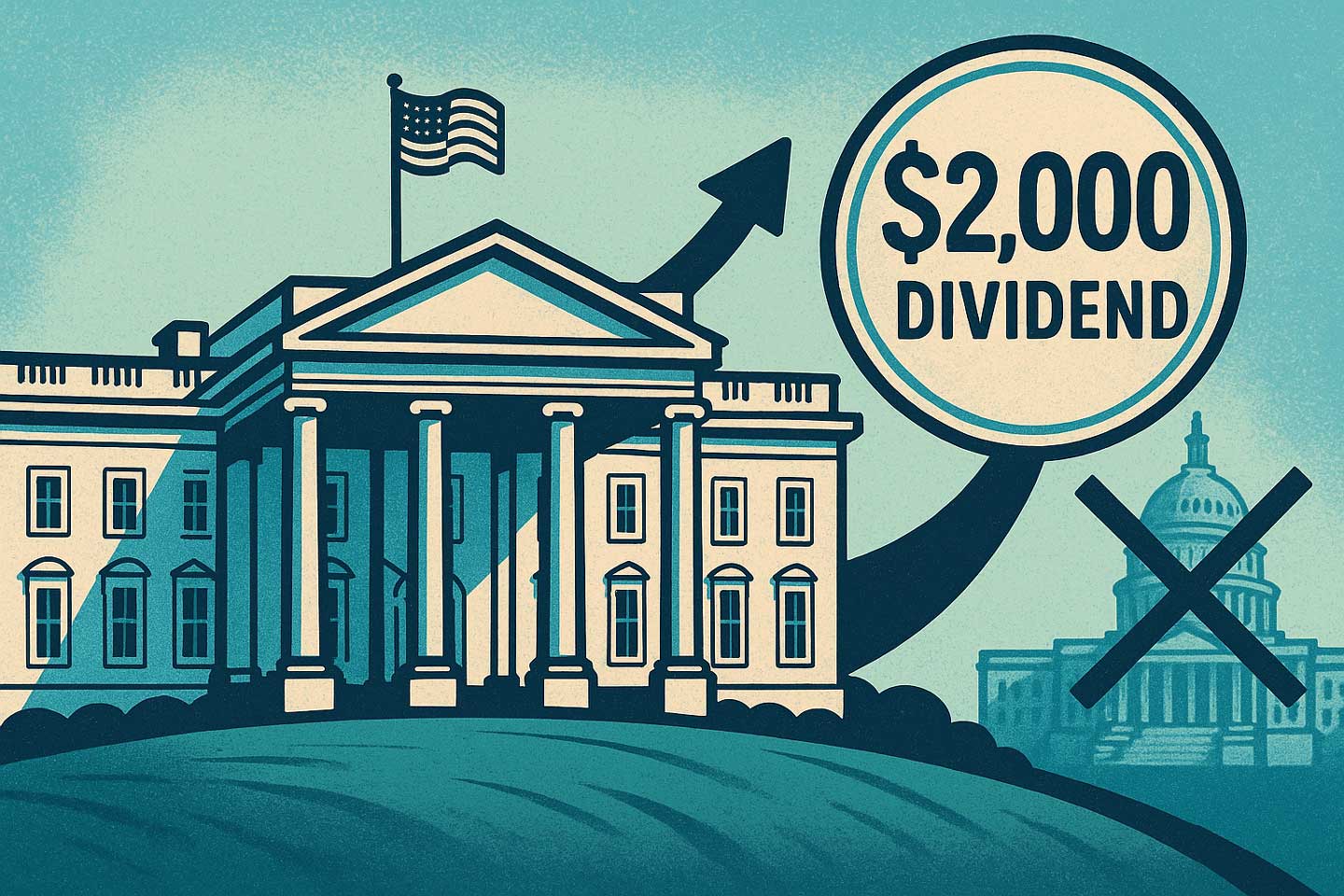
Deputy White House Chief of Staff James Blair said the administration is examining whether it can distribute roughly $2,000 checks to millions of working Americans, funded by tariff revenues, without needing direct congressional approval.
What’s the Proposal?
- The checks would be financed via revenues from the sweeping tariffs implemented earlier this year under Donald Trump’s trade-policy agenda.
- Blair acknowledged the legal and congressional questions: “We will look as hard as possible to see if there’s a way to do it without Congress … The law is the law. I think that the most likely outcome is it requires an act of Congress.”
- Speaker Mike Johnson said the idea “made sense,” but also voiced doubt over bypassing Congress.
- Treasury Secretary Scott Bessent has previously stated the checks would “need legislation” and congressional input.
Why This Matters
- If executed without Congress, it would shift substantial fiscal decision-making power from legislators to the executive.
- The checks represent a politically potent tool ahead of elections: direct payments to working Americans funded by tariff revenue rather than standard appropriations.
- Raises significant legal questions: tariffs are traditionally authorized by Congress; using them as a vehicle for direct payments may face a constitutional challenge.
- Markets watching: Such a payment program could affect consumer spending, inflation expectations, and Treasury financing dynamics.
Market & Options-Angle
- Financials, consumer discretionary stocks, and companies exposed to tariff-driven cost pressures may see volatility as consumer cash flows shift.
- If checks are large and widely distributed, consumer-facing firms may benefit from increased spending; inflation fears could also revive interest rate hedges.
- Regulatory risk: Legal uncertainty around the mechanism may spark options flows among firms exposed to fiscal policy shifts or trade disruptions.
- Watch for unusual activity in: big-box retail, consumer staples, consumer credit lenders, and trade-sensitive exporters.
Takeaway
The White House’s move to explore issuing $2,000 tariff-funded checks without Congress is bold — and high-stakes. If it comes off, it could redefine how fiscal policy is made in the U.S. But the legal and political hurdles are steep, and the timing will be critical. Execution will determine whether this becomes a game-changer or a flashpoint.